
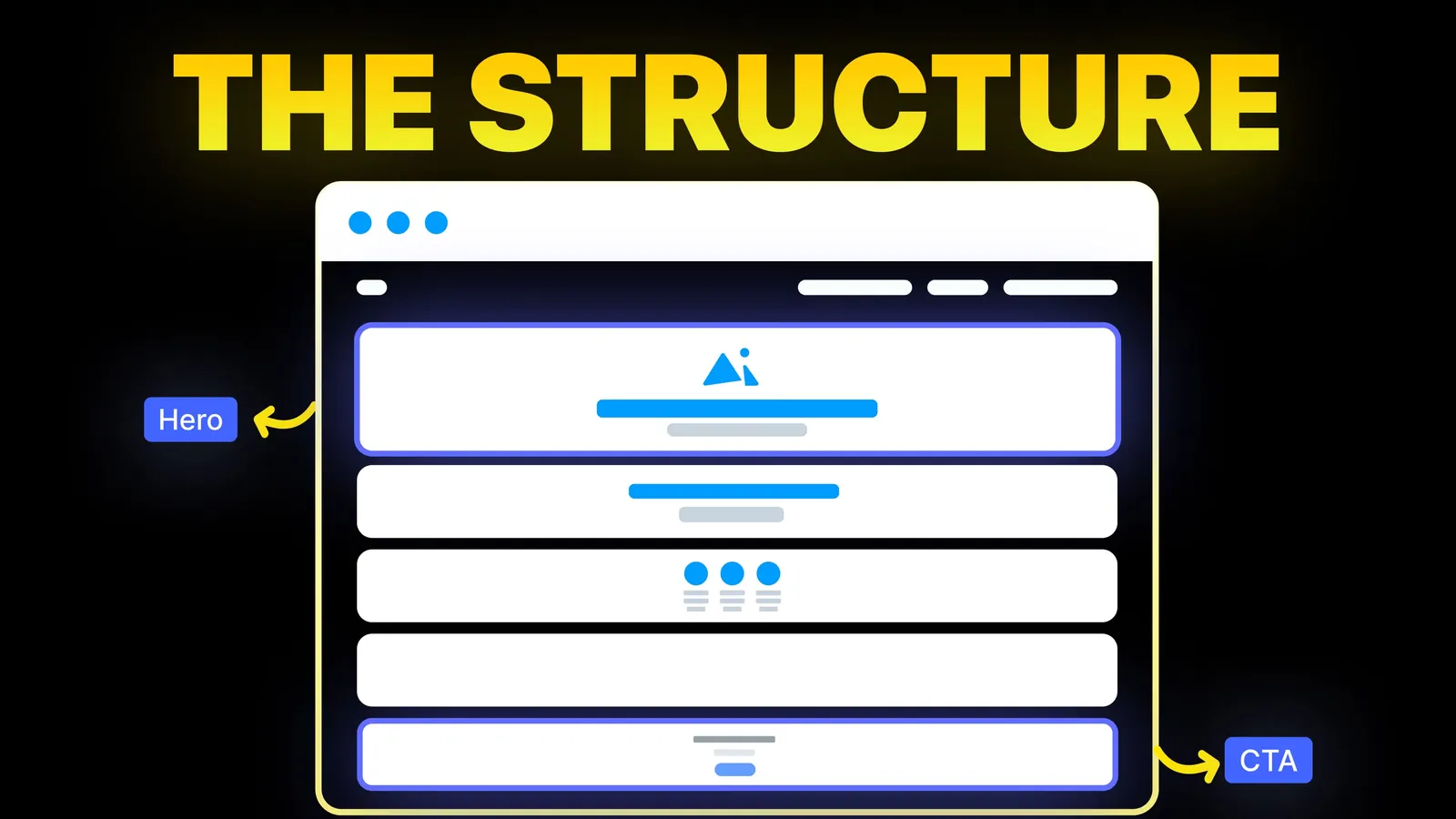
How to Turn Your Website Into a High-Converting Sales Machine
The structure behind a website that sells: the five decisions that carry conversion, the homepage section order, and how to rebuild without losing traffic.
Web Design
The guides that rank for this search show attractive testimonial pages and list tips such as use real names, add video and keep the layout clean. Good advice, but the two I read in full say nothing about the rules a testimonial page works under in the United States. Since October 2024 there is a federal rule on fake reviews and testimonials, and the FTC's own pages say a testimonial on your site counts as advertising. This guide covers the design and the rules, taken from the FTC's pages on 1 November 2026.
This is design guidance, not legal advice. The rules apply to your business and country, so check the FTC pages linked below, or ask a lawyer, before you publish.
A good testimonials page has a short promise at the top, three to five featured stories, a grid of short quotes grouped by type of customer, a few video or photo items if you have them, and a button at the end. Each item names a real person and says what changed for them. You hold written permission for every item, you have not edited a meaning, and anything that is not a normal result is labelled so.
On 1 November 2026 we searched Google for "website testimonials page design". The results included Webstacks, Trustmary, Wix, Ramotion, Designerly and Testimonial Donut. I read Webstacks and Wix in full.
Webstacks lists five things to include and ten example pages. It does not mention the FTC, permission, disclosure or review moderation. Wix lists 15 examples and advises asking customers for permission before publishing, but does not mention the FTC or disclosure either.
So the design advice is solid and consistent: real names, specific results, mixed formats, groups, fresh content, mobile layouts. What is thin is everything about the rules. That is the part this guide adds, and the two halves belong together, because a page that breaks the rules does not build trust for long.
| Part | What it does | Notes |
|---|---|---|
| Opening line | Says who the quotes are from and what they show | One sentence, for example the kind of customer and the kind of job |
| Featured stories (3 to 5) | Carry the page | Problem, what was done, the result, in the customer's words |
| Short quotes | Cover many cases fast | One or two sentences each, with a name and role |
| Video or audio | Adds a human voice | Only with the person's written consent, and with captions |
For button wording, see our call to action examples for small business websites.
Pick testimonials that answer the doubtful visitor's question: "Will this work for someone like me?"
These are taken from three FTC pages read on 1 November 2026: the rule announcement of 14 August 2024, the staff Q&A on the Consumer Reviews and Testimonials Rule (effective 21 October 2024) and the Endorsement Guides Q&A. The FTC says its staff guidance is not comprehensive and is not a safe harbor.
| Topic | What the FTC's pages say | What it means for the page |
|---|---|---|
| Fake or false testimonials | The rule bans creating, selling or buying them, including AI-generated ones, when the business knew or should have known they were fake | Every quote comes from a real customer. No invented names, no stock-photo people, no AI quotes |
| Your own site | Testimonials are advertising, so a business that posts them is disseminating them, not just hosting them | You are responsible for what is on your page, even if a customer wrote it |
| Payment for a sentiment | Incentives are generally allowed, but not if the review has to be positive or negative | Never offer a discount in return for "a five-star review". Ask for an honest one |
| Insider reviews | Employees and relatives may post if they clearly disclose the relationship | Label staff or family quotes, or leave them off |
| Suppression | The rule bans suppressing negative reviews by groundless legal threats, intimidation or false public accusations | Do not threaten reviewers. Do not ask for negatives to be taken down |
| Typical results | If an endorser's result is exceptional and you cannot show it is typical, the advertisement must make clear what results are generally expected | Do not lead with the single best outcome unless you also say what is usual |
| Material connection | Payment, free products, employment or family ties should be disclosed clearly and conspicuously, and a single note on the home page is generally not enough | Put the disclosure beside the endorsement itself |
The Endorsement Guides Q&A adds that asking only customers likely to be satisfied can mislead if it substantially skews how favourable the reviews look. A curated page is not a review site, but the lesson holds: make sure it fairly represents what customers say.
The pages above give no penalty amount. They say the rule lets the FTC seek civil penalties against knowing violators.
| Choice | Do | Avoid |
|---|---|---|
| Card grid | Three columns on desktop, one on a phone, with generous space | Walls of tiny text on a coloured background |
| Quote length | One or two sentences for grid cards, a full page for stories | Truncating a quote so it changes meaning |
| Carousel | Show several quotes at once, or add a pause control | Auto-advancing slides with no way to stop them |
| Video | Captions and a transcript link | Autoplay with sound |
On sliders, W3C's guidance on WCAG 2.2 success criterion 2.2.2 (Pause, Stop, Hide, level A) says auto-advancing content that starts automatically and runs alongside other content needs a way to pause, stop or hide it, or to control how often it updates. The Understanding page lists auto-advancing presentations as an example. A grid avoids the question.
For where the page sits in the whole site, our homepage design ideas and landing page structure guide show where proof belongs on those pages.
A dedicated page is useful for people who go looking for it, but most visitors will not. Put a short proof close to the moment of doubt:
If your testimonials sit in a CMS collection, one entry can feed the page, the service pages and the home page without copying text by hand. Our Webflow CMS guide explains how collections work.
For the wider picture of what makes a site turn visitors into enquiries, see how to build a high converting website and our conversion optimization guide.
We design testimonial sections and pages as part of a site, so the proof sits next to the claims it backs. In a project we plan which quotes go where, build the grid or story layout for phone and desktop, set up the CMS fields (name, role, photo, permission date) so you can add a quote in a minute, and give you a one-page permission and disclosure checklist to keep. We build and look after sites on Webflow, Framer, WordPress and Shopify, and also on Wix, Squarespace and custom builds.See our web design service or website optimization service.
It is good practice and the safe step. Wix's guide also advises asking for permission before publishing. The FTC's pages treat a testimonial on your site as your advertising, so you carry responsibility for it. Get the permission in writing and keep it.
No. The FTC's rule bans creating fake or false testimonials, and its staff Q&A says a business posting testimonials on its own site is distributing them. Use a short "what to expect" section or a description of your process instead, and ask your first customers for honest feedback. This is not legal advice.
The FTC's staff Q&A says incentives are generally allowed, but not if the review must be positive or negative. If you do offer one, make it for any honest review, whatever the rating, and do not choose which reviews get it.
You choose the testimonials on a curated page, but the FTC says that asking only customers likely to be satisfied can mislead if it substantially skews how favourable the feedback looks. Show a fair range, and do not claim that most customers say something unless that is true.
Only with a clear disclosure of the relationship, says the FTC's staff Q&A. For a small business, leaving those quotes off is simpler.
Yes, if they are real. Get written consent and add captions. A paid actor or AI avatar shown as a customer would raise problems under the rule.

The structure behind a website that sells: the five decisions that carry conversion, the homepage section order, and how to rebuild without losing traffic.
About page examples described by structure, what visitors look for per Nielsen Norman Group, and a section order you can follow. Pages read 1 November 2026.

Pricing page layouts for service businesses: packages, from-prices, ranges with cost drivers, sample jobs and quote forms, plus when to keep quote only.