
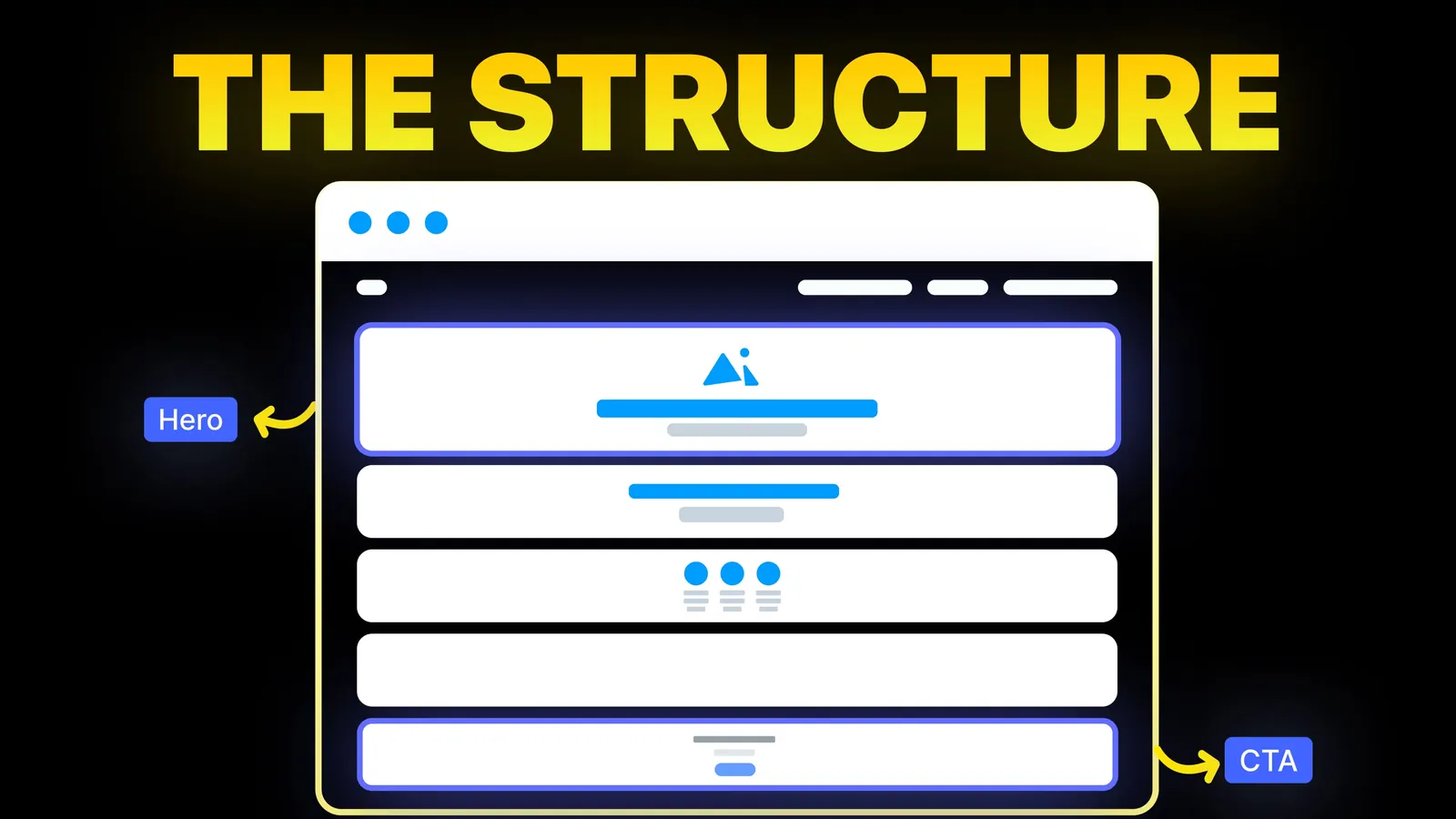
How to Turn Your Website Into a High-Converting Sales Machine
The structure behind a website that sells: the five decisions that carry conversion, the homepage section order, and how to rebuild without losing traffic.
Conversion
A section by section anatomy: what each block has to prove, why the order matters, and how to tell when one of them is quietly failing.
Two landing pages can contain identical words and perform completely differently, because a page is an argument and an argument has an order. Proof before a claim is noise. A price before a reason is a shock. A call to action before the reader understands the offer is a request from a stranger.
This post is the anatomy: what each section is for and how to tell when it is not working. If you want the process for producing one, the research, the wireframe, the build, that is the step by step landing page framework. This one is the reference you keep open while you write.
| Section | The question it answers | Failing when |
|---|---|---|
| Hero | What is this, is it for me | The headline names the company, not the outcome |
| Proof strip | Is this real | Logos with no context, or nothing until the footer |
| Problem | Do they understand my situation | It describes the product instead of the reader |
| Offer | What exactly do I get | Benefits with no concrete deliverable |
| How it works | What happens if I say yes | Vague process, no timeline, no effort estimate |
| Evidence | Has it worked for someone like me | Testimonials that praise the vendor but name no result |
| Objections | What is the catch | Silence where the price or the risk should be |
| Close | What do I do now | A different action from the one in the hero |
You can move sections, but you cannot skip the questions. Every reordering that works still answers them all, and skipping one is the most common reason a page with good traffic underperforms.
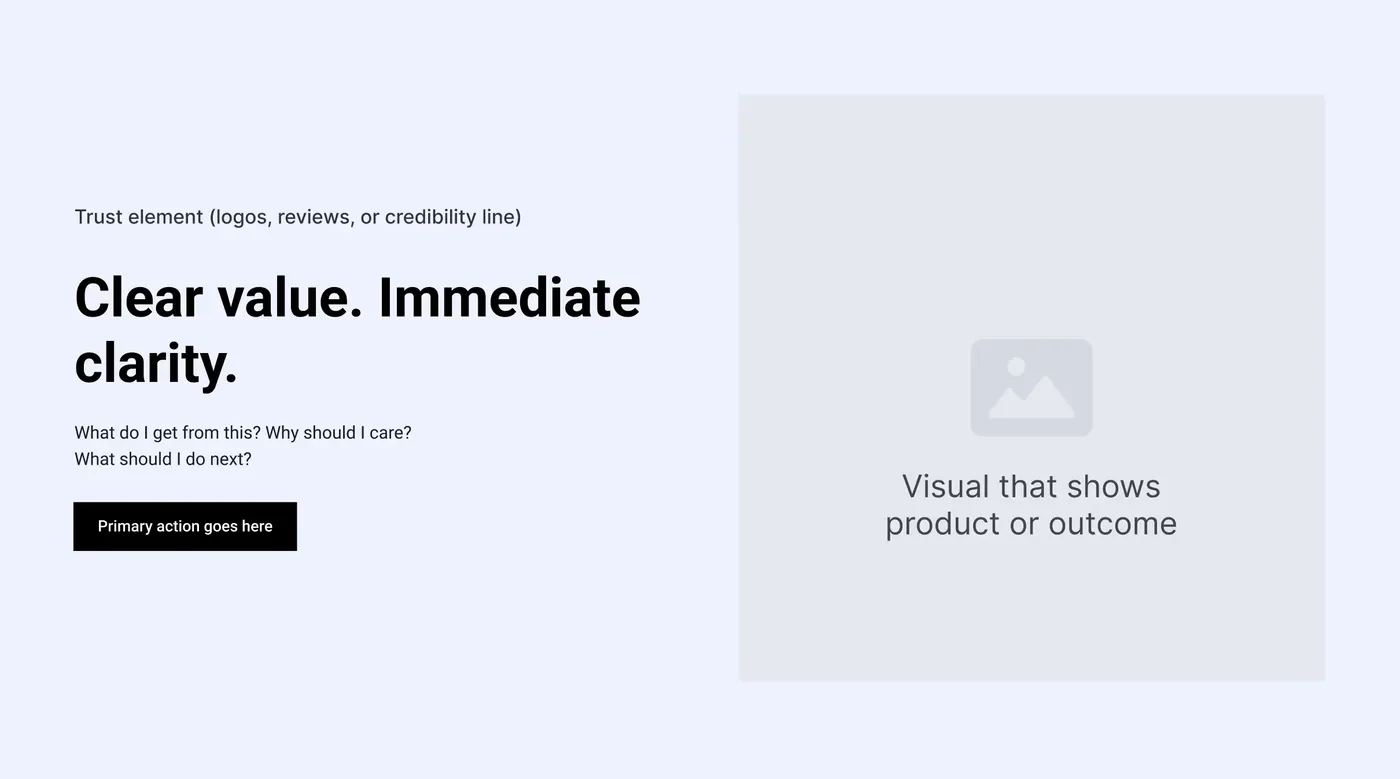
Name the outcome and the audience in a sentence a stranger could repeat. Everything else in the hero supports that sentence: a subheading that adds the how, one action, and one piece of proof. The detail work on this section is in hero section design.
Example of the difference. "A modern platform for modern teams" tells a reader nothing. "Ship your support queue in half a day, with a shared inbox your team actually answers" names the change and the reader. The second is harder to write because it forces a decision about who you are for.
One row, early, that says other people have already made this decision. Client names, review scores, a number you can stand behind. Keep it near the top: proof at the bottom only reassures readers who were already convinced. For a whole SaaS site, our five-page structure gives each page one job.
Describe the reader's situation accurately enough that they recognise it. Two or three sentences is often enough. Too long and the page becomes a lecture, too short and the offer arrives before the reader is ready for it.
This is where most pages go soft. "Tailored solutions for your business" is not an offer. What is included, what is not, how long it takes, what it costs or what moves the cost. People do not buy what they cannot picture.
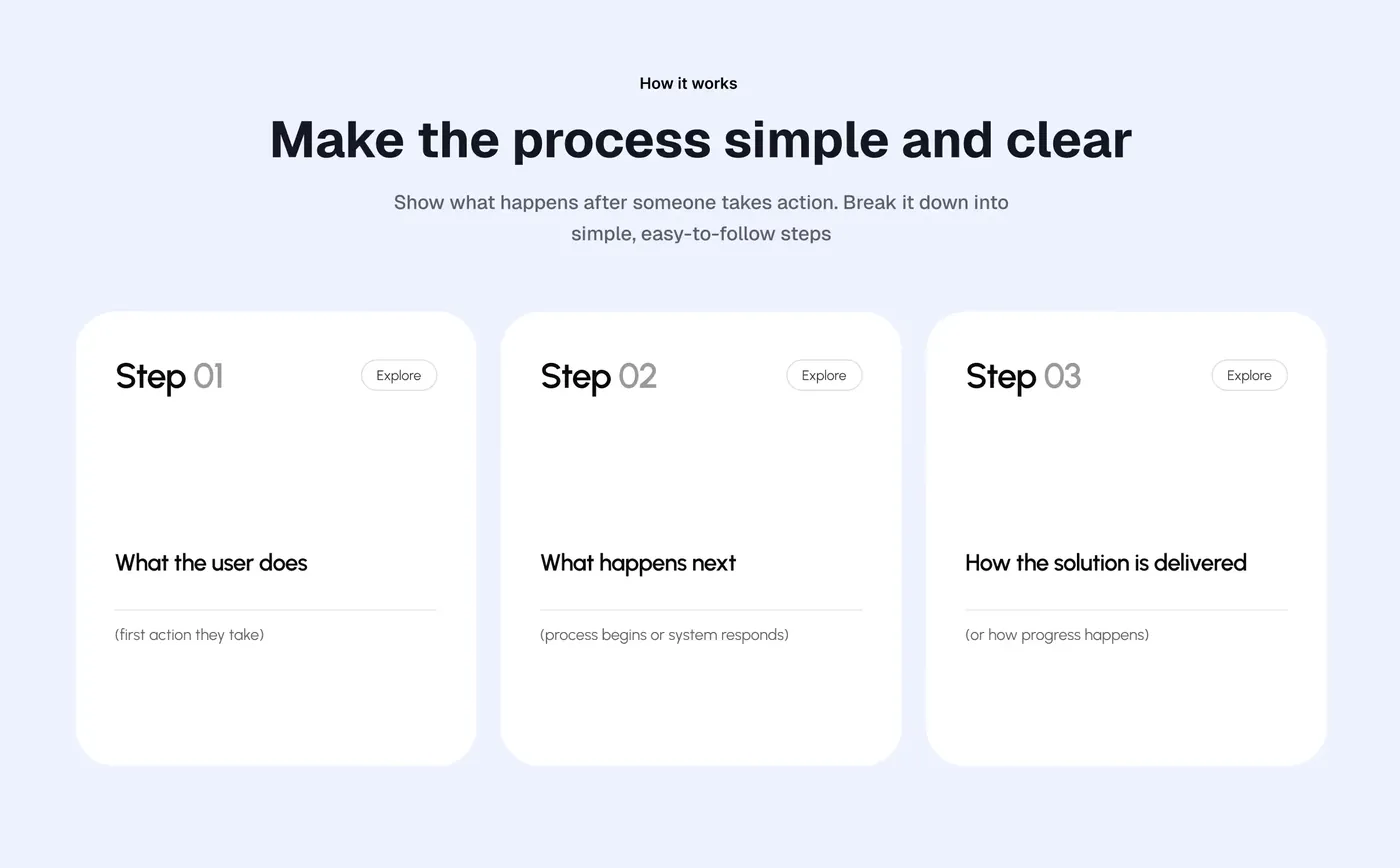
Three or four steps, plainly named, with an honest sense of effort and time. Buyers are not afraid of the product, they are afraid of the mess of starting.
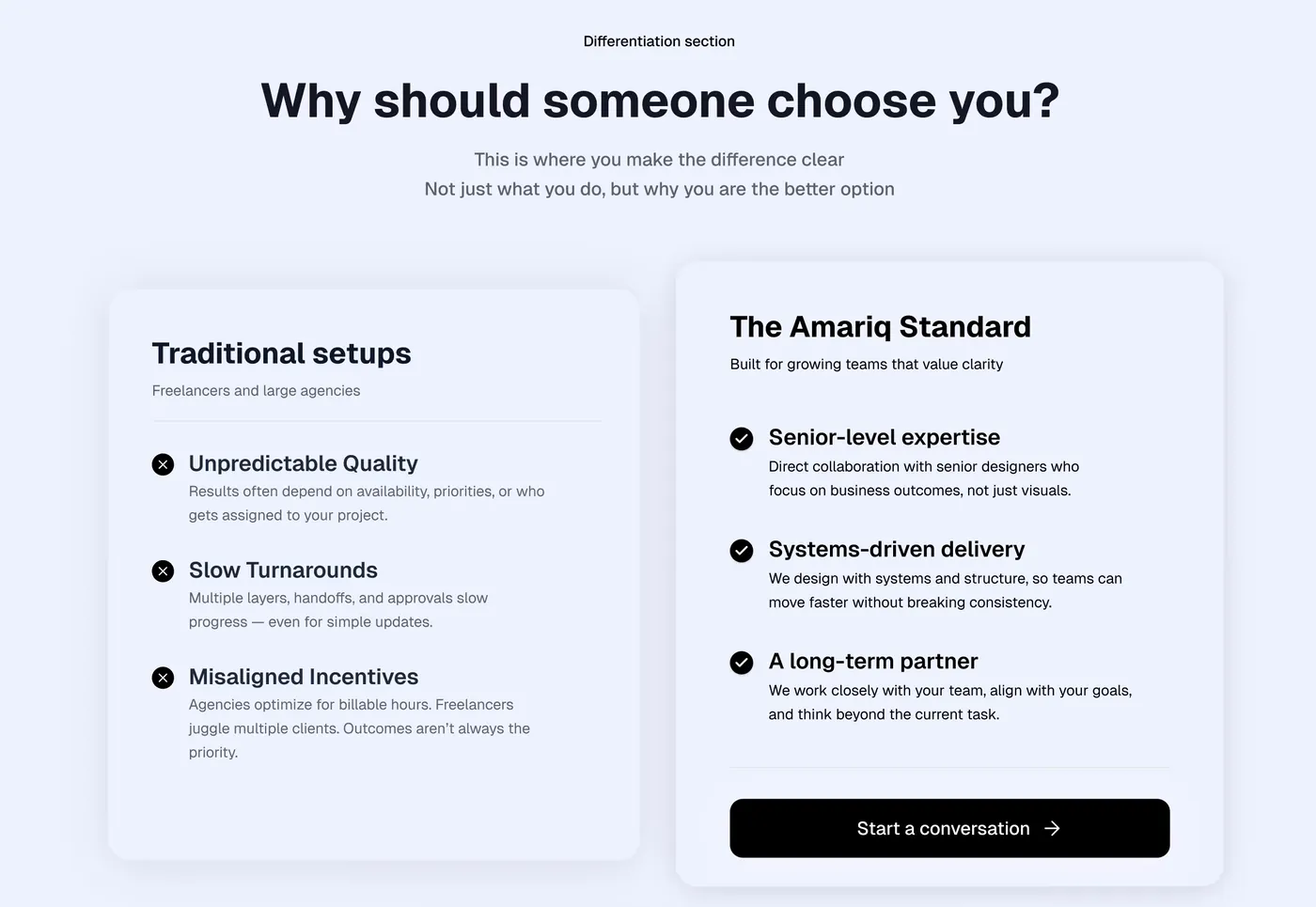
Pair proof with claims rather than pooling it in one block. A testimonial next to the section it supports is worth more than five in a carousel. The strongest ones name a situation, not an adjective.
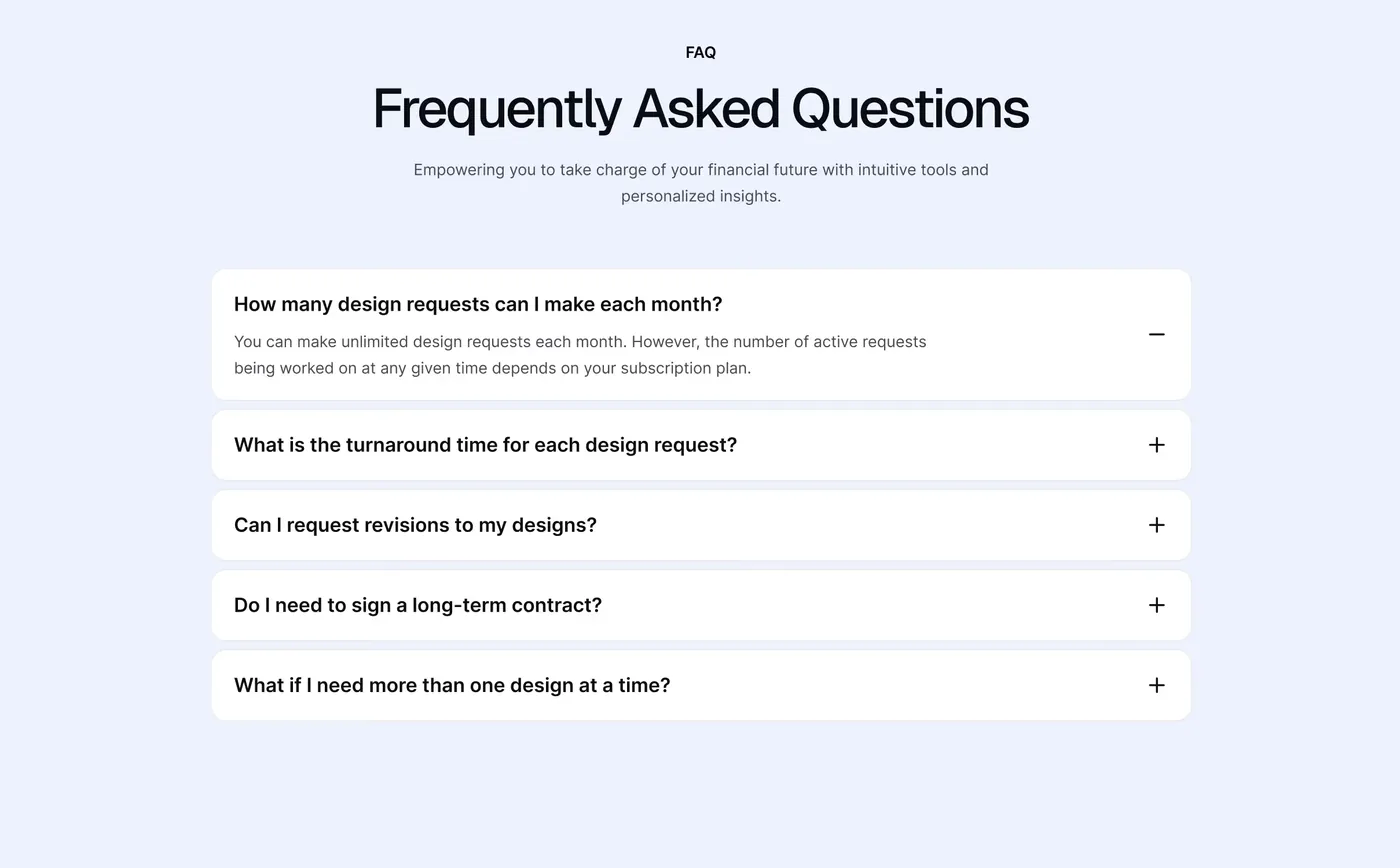
Price, timeline, switching cost, "will this work for someone like me". If you do not answer these, the reader answers them alone, and the safe answer is no. A short FAQ near the close does this work.
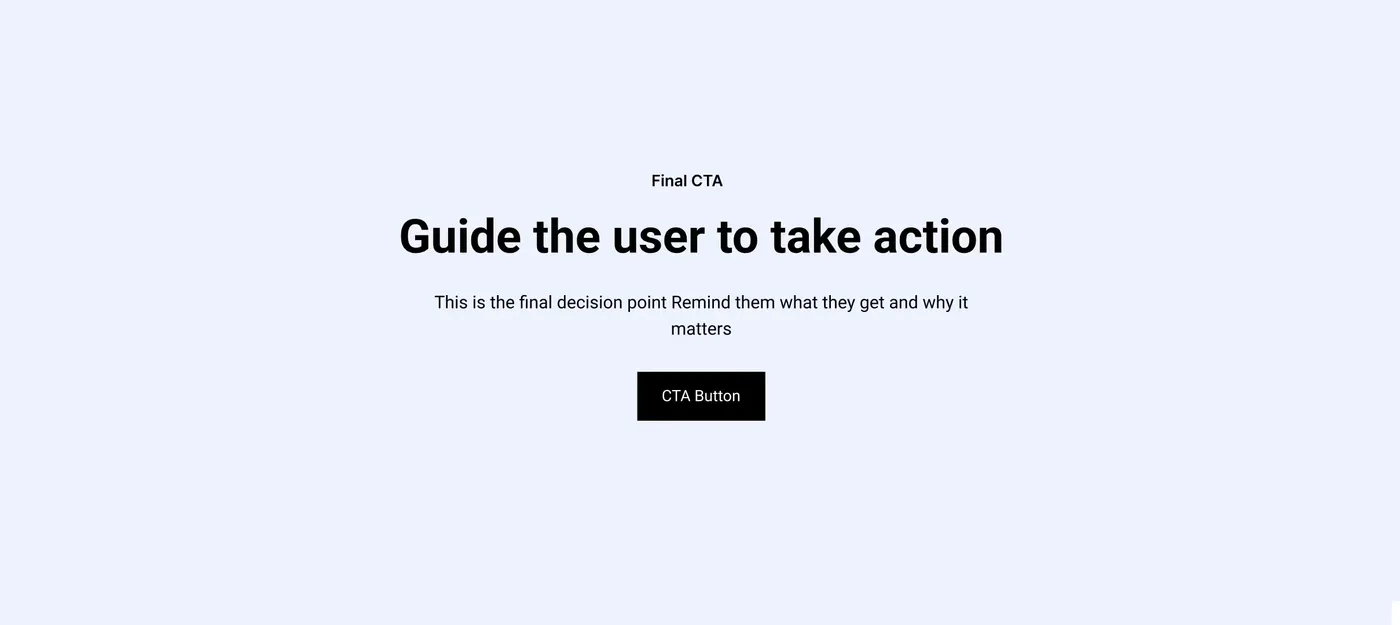
Same action, same words as the hero. A page that offers a demo at the top and a newsletter at the bottom has changed its mind in front of the customer.
If several of those are true at once, the page needs the structural rebuild described in why your website is not converting rather than another round of edits.
As long as the decision requires. A cheap self-serve signup needs little. A considered purchase needs the objections answered, and cutting the page short just moves the questions into an email.
In the hero when the traffic already knows what it wants, usually paid or branded search. Further down when the offer needs explaining first. For a trade that sells custom work, the form fields and page order from a real rebuild show how a form can qualify enquiries.
Same questions, tighter answers. Ad traffic arrives mid-thought, so the page has to match the promise in the ad before anything else.
One action, repeated. Several placements of the same ask is good. Several different asks is the problem.
Yes, with the product page as the offer section: proof, shipping and returns as objections, and the add to cart as the single repeated ask.

The structure behind a website that sells: the five decisions that carry conversion, the homepage section order, and how to rebuild without losing traffic.
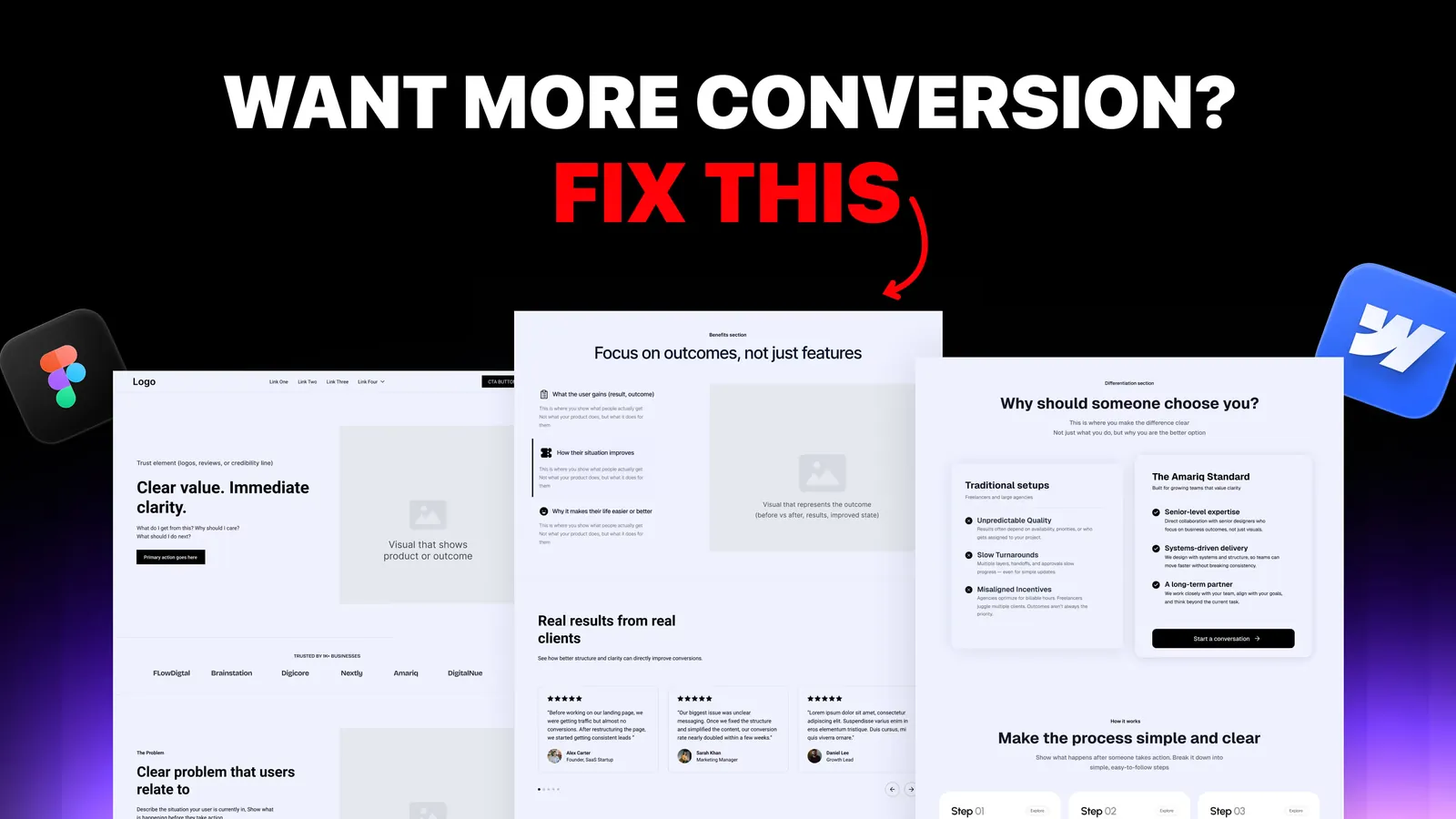
The production process for a landing page that converts: research, message, wireframe, copy, design, build and the first test, in the order that saves rework.
The five jobs of a hero section, before and after headline examples, hero patterns by business type, and how to design the first screen for a phone.