
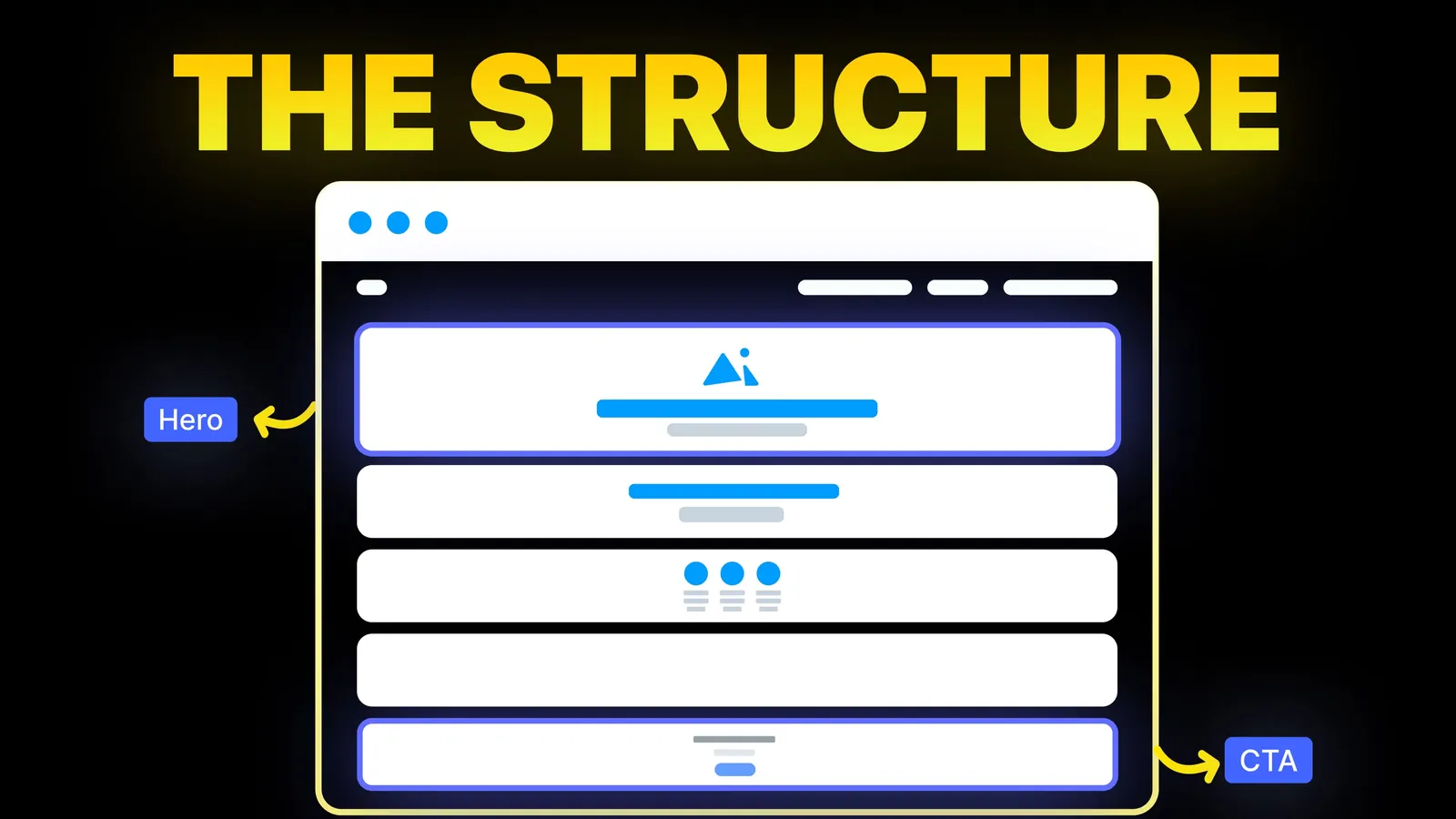
How to Turn Your Website Into a High-Converting Sales Machine
The structure behind a website that sells: the five decisions that carry conversion, the homepage section order, and how to rebuild without losing traffic.
Web Design
Most guides define the two terms and then say "you need both." That is true for some businesses and wrong for others. This one starts from your situation, uses Google's own rules for ads and search as the tie-breakers, and says when one page is all you should build. Sources checked 1 November 2026.
A website is a set of connected pages on one domain. It answers many questions for many kinds of visitor: who you are, what you do, what it costs, where you are, and how to get in touch. Wix calls it the central hub for a business's marketing, and its list of traffic sources includes organic, direct, referral and paid visits.
A landing page is one page built for one action, such as booking a call, joining a list or buying one product. Shopify's guide puts it as a page with a single marketing goal that sits inside a wider site. Wix says its visitors mostly arrive from ads, emails and social posts, and that it limits the options on the page to steer people toward the single call to action.
Both guides, read on 1 November 2026, also make the same two honest admissions. A single-page site can act as both a website and a landing page. And neither is better than the other: they do different jobs.
| Website | Landing page | |
|---|---|---|
| Visitors arrive from | Search, direct, referrals, social, ads | Usually one ad, email or post |
| Number of goals | Several | One |
| Menu | Full navigation | Often none, or a logo only |
| Judged by | Engagement, enquiries, search visits | Conversion rate on the one action |
| Search value | Can rank for many topics across many pages | Can target a campaign keyword, usually less long-term weight |
| Lifespan | Years | A campaign, or a long time if the offer stays |
The rows on search value and measurement come from the Wix and Shopify guides. The lifespan row is our reading of how the two are normally used.
Find the row that sounds like you. The right column is our recommendation, based on the sources above and how the two are used, not a rule.
| Your situation | Build this first | Why |
|---|---|---|
| No website at all, and customers find you by search or referral | Website | People who hear your name will look you up, and they expect to see who you are, what you do and how to contact you |
| No website, and one service you sell in one way | A one-page site | It is a site and a landing page in one, as Wix and Shopify both allow |
| A working website, and you are about to run ads | Landing page, one per offer | Google rates how relevant the page is to the click, and a homepage cannot be relevant to every ad |
| A working website that gets visitors but few enquiries | Fix the website first | A landing page adds a new door, but the visitors you already have are walking past the one you built |
| A launch, an event, a webinar or a short sale | Landing page | The page has one job and a clear end date |
| Many services, locations or products | Website, plus landing pages for the paid ones | Each service needs its own page for search, and the ad pages sit beside them |
| A shop with a catalogue | Store (website), plus landing pages for campaigns | The product pages already work as landing pages for many shoppers |
Two Google pages settle more of this decision than most opinions do. Both were read on 1 November 2026.
Google's help page on landing page experience defines it as how relevant and useful your landing page is to the people who click your ad. Google rates it as above average, average or below average by comparing it with other advertisers whose ads showed for the same search over the last 90 days. It is one of the three parts of Quality Score, which Google presents as a diagnostic tool, not an input to the ad auction. A below average rating is a sign the page may be worth improving.
Google's destination requirements add some floors. The page must work on common browsers and devices, match the domain in your display URL, and offer real content or functionality. Copied content and pages that only send users elsewhere break the policy.
What this means for the choice: a page made for the click is easier to keep relevant than a page that has to serve everybody. That is the case for a landing page when you pay for traffic. It is not a case against a website. The destination rules ask for a working, useful page, and a good small website meets them too.
Google's SEO starter guide says helpful, reliable, people-first content will likely affect your search presence more than any other tip in it. It asks for descriptive URLs, for a title that is unique to the page and accurately describes it, and for one URL per piece of content, using redirects or canonical tags when two pages carry the same information.
That favours a website for anyone who wants to be found by search. One page can have one title and one main topic. Ten services need ten pages to say ten different things. If you want customers to find you without paying for each click, the pages are the asset. See our notes on the structure of a five-page site and on how to build a high-converting website.
Answer these five questions. Count the answers marked A and the ones marked B.
| Your count | What it suggests |
|---|---|
| 4 or 5 answers marked A | Build or improve the website |
| 4 or 5 answers marked B | Build a landing page and keep your site as is |
| 2 or 3 of each | Build a small website where the homepage doubles as the landing page, then add landing pages for paid offers |
It is a prompt for thinking, not a verdict. If your answers split, trust question 1 first.
The order that wastes least money, in our view, is this:
For what each costs, read our landing page cost guide and our website redesign cost guide. For what goes on the page once you decide, read landing page structure and the step-by-step landing page process. To compare studios that build single pages, see landing page design agencies.
Most people come to us with one of these two questions, and we start by asking where their visitors come from, because that answer picks the build. For a business with no site, we design and build the full website. For a business that already has one and is about to buy traffic, we build a focused page for the offer and wire the form and tracking so the leads reach you. We work on Webflow, Framer, WordPress and Shopify, and on Wix, Squarespace and custom builds when they fit. We price each project from its scope, never by the hour. See our Webflow development and Framer development pages.
No. A landing page is one page with one goal. A website is a group of pages that serve several goals. A one-page site can be both, which is why the two overlap.
For some businesses, yes. Wix says a landing page can work as a website if one page is enough to promote a single product, service or offer. It stops working when customers need prices, proof, several services or a way to find you through search.
Usually a focused page does better, because Google rates the landing page on how relevant and useful it is to the person who clicked. A homepage has to serve everyone. If your homepage is already about the one thing you advertise, it can work.
A website, in general. Both Wix and Shopify say sites can rank for many keywords through many pages, while landing pages carry less long-term search weight. Google asks for a unique, accurate title and one URL per piece of content, which many pages do better than one.
Not always. If your visitors come from search and referrals, the service pages of your website are your landing pages. A separate page starts to matter when you add paid ads, email campaigns or a launch.
One per offer and audience that you pay to reach. Three different ads promising three different things should go to three pages, not one. Our guide on call to action examples shows how the button changes with the offer.

The structure behind a website that sells: the five decisions that carry conversion, the homepage section order, and how to rebuild without losing traffic.
How to design a website testimonials page: what goes on it, how to lay it out, and what the FTC's pages say about fake reviews, typical results and disclosure.
About page examples described by structure, what visitors look for per Nielsen Norman Group, and a section order you can follow. Pages read 1 November 2026.