
How to Turn Your Website Into a High-Converting Sales Machine
The structure behind a website that sells: the five decisions that carry conversion, the homepage section order, and how to rebuild without losing traffic.
Conversion
The production process, in the order that avoids rework: what to find out, what to write, what to draw, and what to test first.
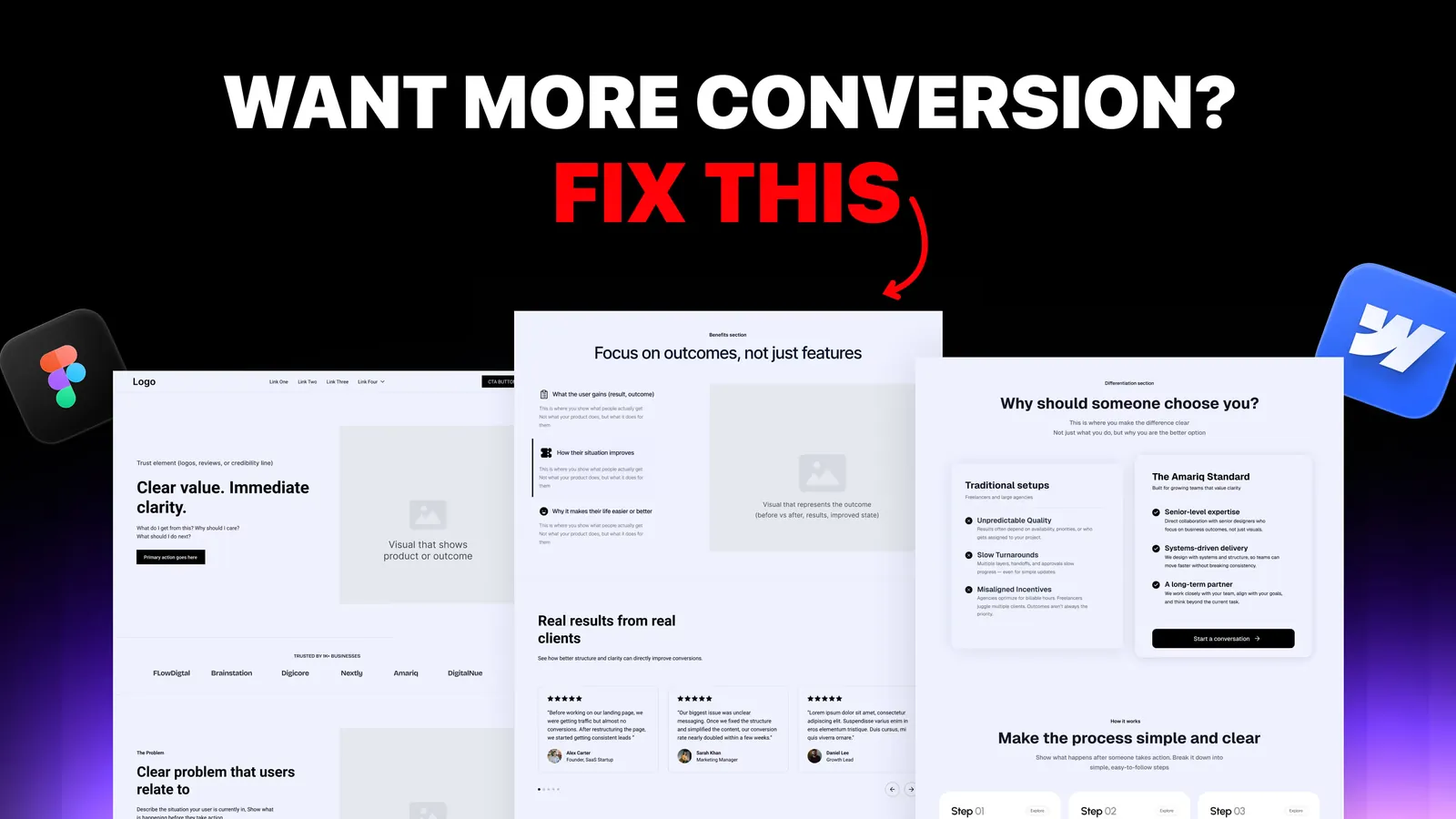
There are two different questions people ask about landing pages. What goes on the page, and how do I actually make one. The first is answered section by section in landing page structure that actually converts. This post is the second: the order of work, from a blank page to a live one.
The order matters because almost every expensive mistake in this work is a sequencing mistake. Design before message means redesigning. Build before copy means rebuilding. Testing before traffic means guessing.
Before anything visual, answer five things in writing:
If any answer is missing, the page will paper over the gap with adjectives. This one page also becomes the thing you judge the design against later, which is how you avoid a review that is only about taste.
The best landing page copy is usually already written by your customers. Pull it from sales calls, support tickets, review sites and the emails people send before they buy. Collect the exact phrases: the way they describe the problem, the words they use for the alternatives, the objection that comes up every time.
This is the cheapest step and the one most often skipped. The method for turning that raw language into page copy is in our website copy guide.
Write the page as a list of section headings and one sentence each, with no layout at all. If the argument works as a list, it will work as a page. If it does not, no amount of design will rescue it, and you have found that out in an hour rather than a fortnight.
Then draw the wireframe: boxes, real headlines, real proof, no colour, no images. Review this with the people who will approve the page. Approving a wireframe is approving the argument, which is the decision that matters.
Design to real words, never to placeholder text. Every layout decision, the length of a headline, how many columns, whether a section is two-up or three-up, depends on the actual strings. Designing to lorem ipsum guarantees a rework pass the moment the copy arrives.
Write in this order: headline, offer, objections, then everything else. The hard parts first, because they change the rest.
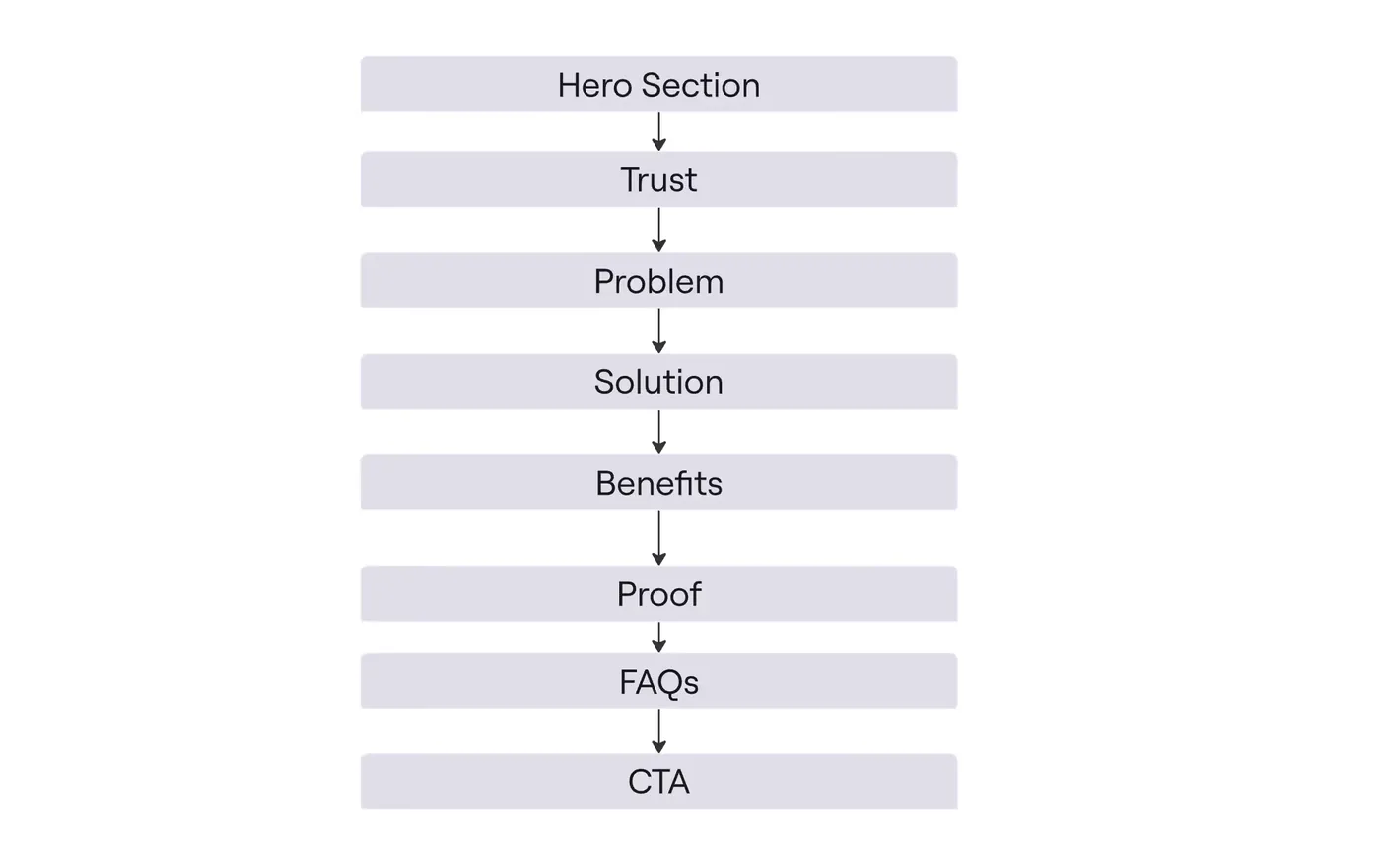
Start with the first screen and get it settled before anything below it. Then design each section to do its one job and hand over to the next. Two practical rules save most of the pain:
The visual craft in that first screen has its own post: hero section design.
A landing page that needs a developer for every edit will stop being edited, and a page that stops being edited stops converting. Build the sections as components, put the content in the CMS where it repeats, and hand over with a short walkthrough. This is the same standard we apply on a conversion focused redesign.
Before it goes live: the form submits and routes correctly, the thank you state works, analytics fires, the page loads fast on a phone on a normal connection, and every link goes where it says.
Take a baseline before you change anything else: conversion rate, scroll depth, device split, and the traffic source mix. Then make one change at a time.
| Order | What to test | Why this order |
|---|---|---|
| 1 | Headline and subheading | Highest reach, lowest cost |
| 2 | The single call to action | Removes the decision that stalls people |
| 3 | Proof placement | Answers doubt at the moment it appears |
| 4 | Form length | Usually the largest measurable lift |
| 5 | Section order | Bigger swing, needs more traffic to read |
Resist testing colour first. It is the easiest thing to change and the least likely to matter.
Brief and research: two to four days. Wireframe and copy: three to five days. Design: three to five days. Build and QA: three to five days. So a serious landing page is two to three weeks of elapsed time with a responsive client, and most of the delay in practice is waiting for content and approvals rather than production.
You can skip the drawing, not the thinking. Write the section list and the one-line purpose of each before you drop content into a template.
Whoever can hear the customer's language accurately. In practice it works best as a draft from the person closest to sales, edited by whoever is strongest at structure.
Someone outside the project reads it once and can tell you what you do, who it is for, and what happens next. If they hesitate, the page is not ready.
One page, done properly, then variants for different traffic sources once you know the base version works.
Review it whenever the offer, the price or the main objection changes. Otherwise, quarterly is plenty for a page that is performing.

The structure behind a website that sells: the five decisions that carry conversion, the homepage section order, and how to rebuild without losing traffic.
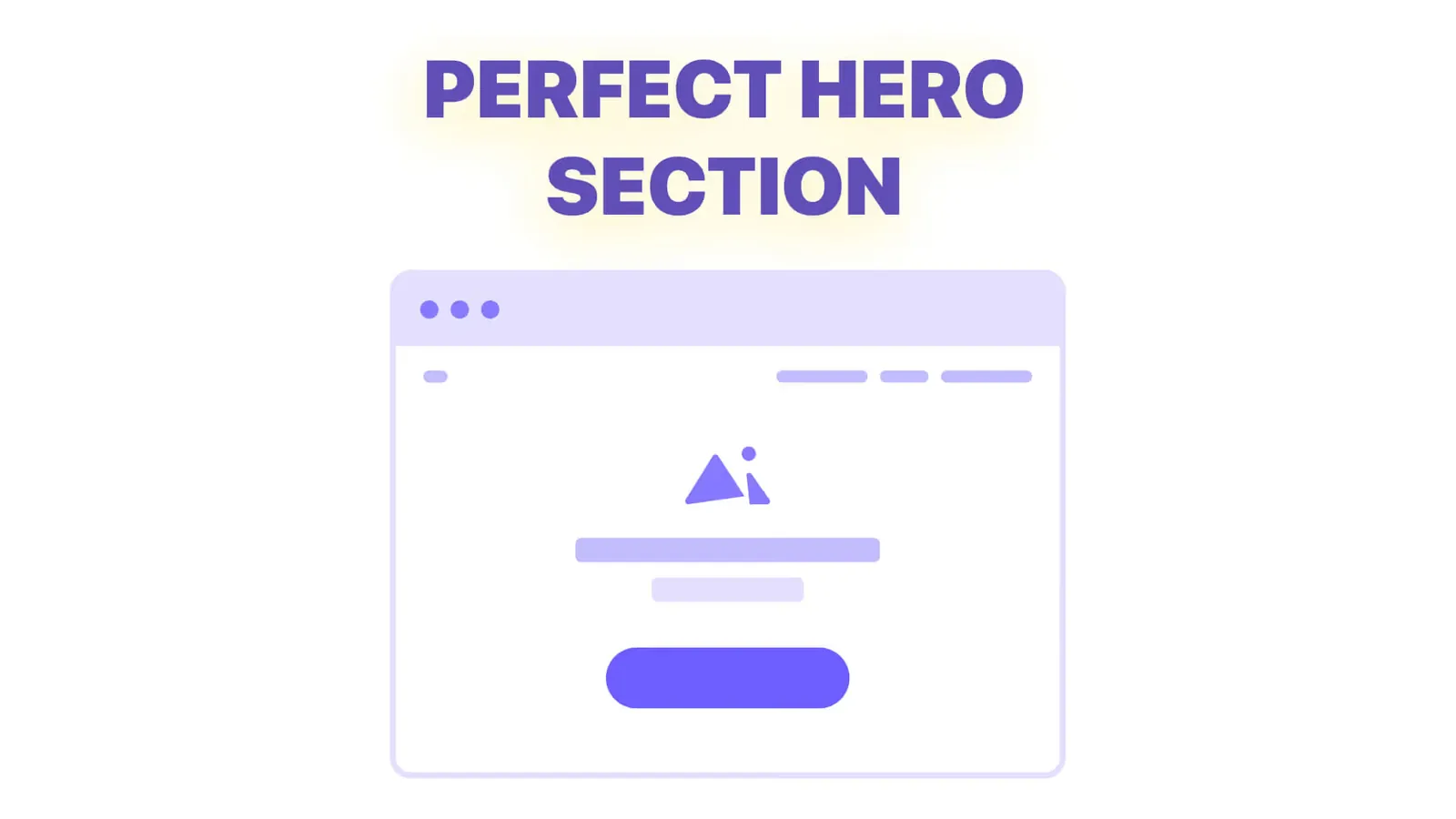
The five jobs of a hero section, before and after headline examples, hero patterns by business type, and how to design the first screen for a phone.
A step by step method for website copy that sells: collect customer language, build a message hierarchy, write the headline, body and calls to action, then edit.