
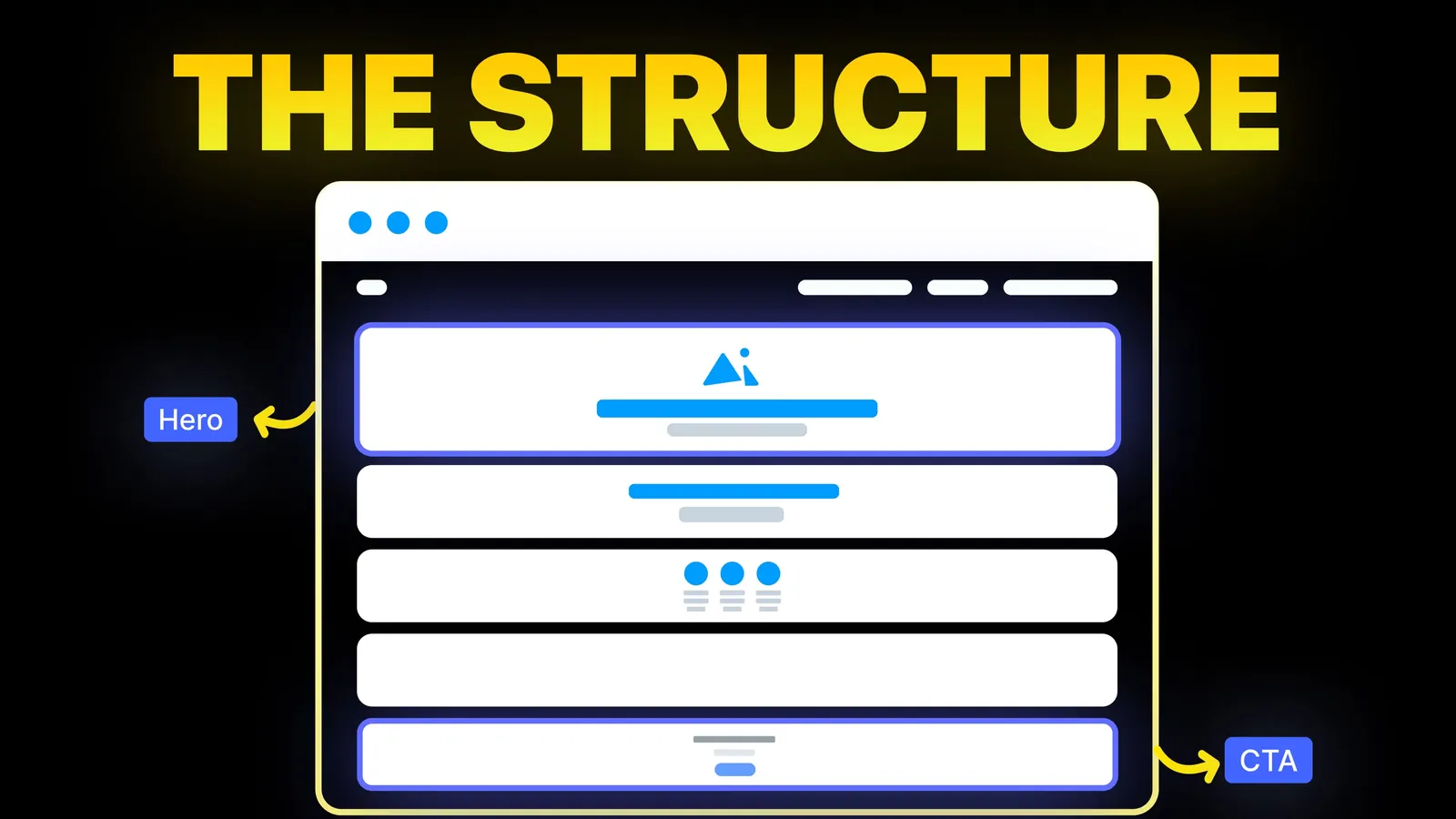
How to Turn Your Website Into a High-Converting Sales Machine
The structure behind a website that sells: the five decisions that carry conversion, the homepage section order, and how to rebuild without losing traffic.
Web Design
The pages that rank for this question give answers from "a few minutes" to "a full year", and some disagree with themselves. We put four of them side by side, separated the hours you spend from the weeks on the calendar, and listed what really moves a launch date. Checked 22 October 2026.
For a typical five to fifteen page business website:
The work itself is rarely the slow part. Decisions, copy, photos and feedback rounds are.
On 22 October 2026 we took the guides Google ranks for this question and copied each one's estimates by site type. Where a guide gives no figure, the cell says so.
| Site type | Wix (updated Oct 2026) | Elementor (29 Jun 2026) | Belt Creative (21 Sep 2026) | Hostinger (14 Oct 2026) |
|---|---|---|---|---|
| One page or landing page | 1 to 2 days | A few hours (simple); 1 to 3 days DIY for 1 to 5 pages | 1 to 2 weeks | 4 hours to 3 days on a builder; 2 to 8 days on WordPress; 8 to 21 days in custom code |
| Small business site, DIY | 20 to 40 hours over a few weeks | 1 to 2 weeks (5 to 15 pages) | Not given | Not given |
| Small business site, professional | Not given | 4 to 8 weeks | 6 to 8 weeks | Not given |
| Small online store | Not given | 3 to 6 weeks DIY; 8 to 12 weeks professional | 8 to 12 weeks | 1 to 7 days on a builder; 5 days to 5 weeks on WordPress |
| Large or custom site | 1 to 6 months, fully custom | 4 to 6+ months; web apps 6 to 12+ months | Not given | 5 to 14 weeks on a builder; 13 to 22 on WordPress; 15 to 40 in custom code |
Three things to know about these sources:
So read the table as a range of opinions, not a forecast for your project.
The question has two answers that most guides blend: how many hours of work the site takes, and how many weeks pass before it goes live.
| Route | Your own time | Calendar time | Why the two differ |
|---|---|---|---|
| AI builder draft | Minutes to an hour | Same day | Hostinger and Wix both say a first version can be generated in minutes; your words and photos still need checking |
| DIY on a builder | 20 to 40 hours (Wix) | A few weeks | The hours are spread over evenings and weekends |
| Freelancer or studio | Several hours of meetings, reviews and content | 4 to 8 weeks for a small business site | Waiting for feedback and content sits between the working days |
| Small online store with a professional | More: products, photos, shipping and tax settings | Two to three months | Product data is content too |
When you hire someone, your hours fall to a handful, but the calendar is still set by how quickly you answer. Belt Creative's breakdown for a five-page Webflow site shows it: about a week of design and one to two of development, with discovery, content collection, wireframes, edits, testing and launch around them.
Belt Creative's published phases for a five-page business website on Webflow, read on 22 October 2026:
| Phase | Belt Creative's estimate |
|---|---|
| Discovery and website strategy | 2 to 7 days |
| Site map and content collection | 1 to 2 weeks |
| Wireframing and adding content | 1 week |
| Website design | 1 to 2 weeks |
| Website development | 1 to 2 weeks |
| Edits, SEO and testing | 1 to 2 weeks |
| Launch and training | 1 to 3 days |
Added end to end, these phases come to roughly 5 to 10 weeks at the extremes, which is our arithmetic and wider than the 6 to 8 weeks Belt Creative quotes, because studios run some phases in parallel. Elementor's phase list is wider still, with development alone at 1 to 8+ weeks.
These are the causes the guides name most, in the order we see them matter:
If budget is part of the question, our guides to website redesign cost and landing page cost put published price ranges next to the scope, and our platform guide helps you pick where the site will live.
Our service pages state these timelines, each from an approved design unless noted:
| Work | Timeline on our service pages |
|---|---|
| Design for a small marketing site | Three to six weeks |
| Framer marketing site build | Two to five weeks |
| Webflow build | Three to six weeks |
| WordPress build | Four to eight weeks |
| Shopify theme build | Three to seven weeks |
| Store build | Five to ten weeks |
Design and build run one after the other, so a new site designed and built on Webflow adds up to six to twelve weeks by our arithmetic. Our quotes follow the scope of the job rather than an hourly rate. Payments are split 40/30/30: the first at kick-off, the second when the design is approved, the third just before go-live. With the third payment made, ownership of the design, copy and code passes to you, while the domain, hosting and analytics have been in your own name throughout. Details are on our web design and Webflow development pages.
In the guides we read, a small business website takes about 4 to 8 weeks with a professional, a small online store about 8 to 12 weeks, and a large custom site several months. Built yourself on a builder, a small site is roughly 20 to 40 hours of work by Wix's estimate.
Wix's guide says roughly 20 to 40 hours spread over a few weeks for a small business site, and Elementor says 1 to 2 weeks for a 5 to 15 page site on a builder. Writing the content usually takes longer than placing it.
A simple one-page site, yes. Hostinger puts a single page on a builder at four hours to three days, and Wix says a landing page can sometimes take one to two days. A full business site in a day is unlikely if the words and photos are not ready.
Elementor gives 4 to 8 weeks for an agency-built small business site and Belt Creative gives 6 to 8 weeks for a business website. Most of that time is planning, content and review rounds around the design and build.
Belt Creative says at least 8 weeks, with an ecommerce site at 8 to 12. Elementor puts the same 8 to 12 weeks on a small store with a professional, and 3 to 6 weeks for a small store built yourself.
Minutes for a first draft. Hostinger says 5 to 15 minutes to generate a single page with its AI builder, then 15 to 45 minutes to refine. Checking the words, photos and contact details still takes time.
Missing content and slow feedback. Belt Creative names content collection as the stage that runs over when copy is not ready, and every extra round of changes adds days.

The structure behind a website that sells: the five decisions that carry conversion, the homepage section order, and how to rebuild without losing traffic.
Website speed optimization for a small site: what to measure, the fixes in order of payoff, and real numbers from our own pages, checked 22 October 2026.

How to make a product demo video: where it goes on a SaaS site, how to record it on a Mac, which recorder to pick and how to add it without slowing the page.