
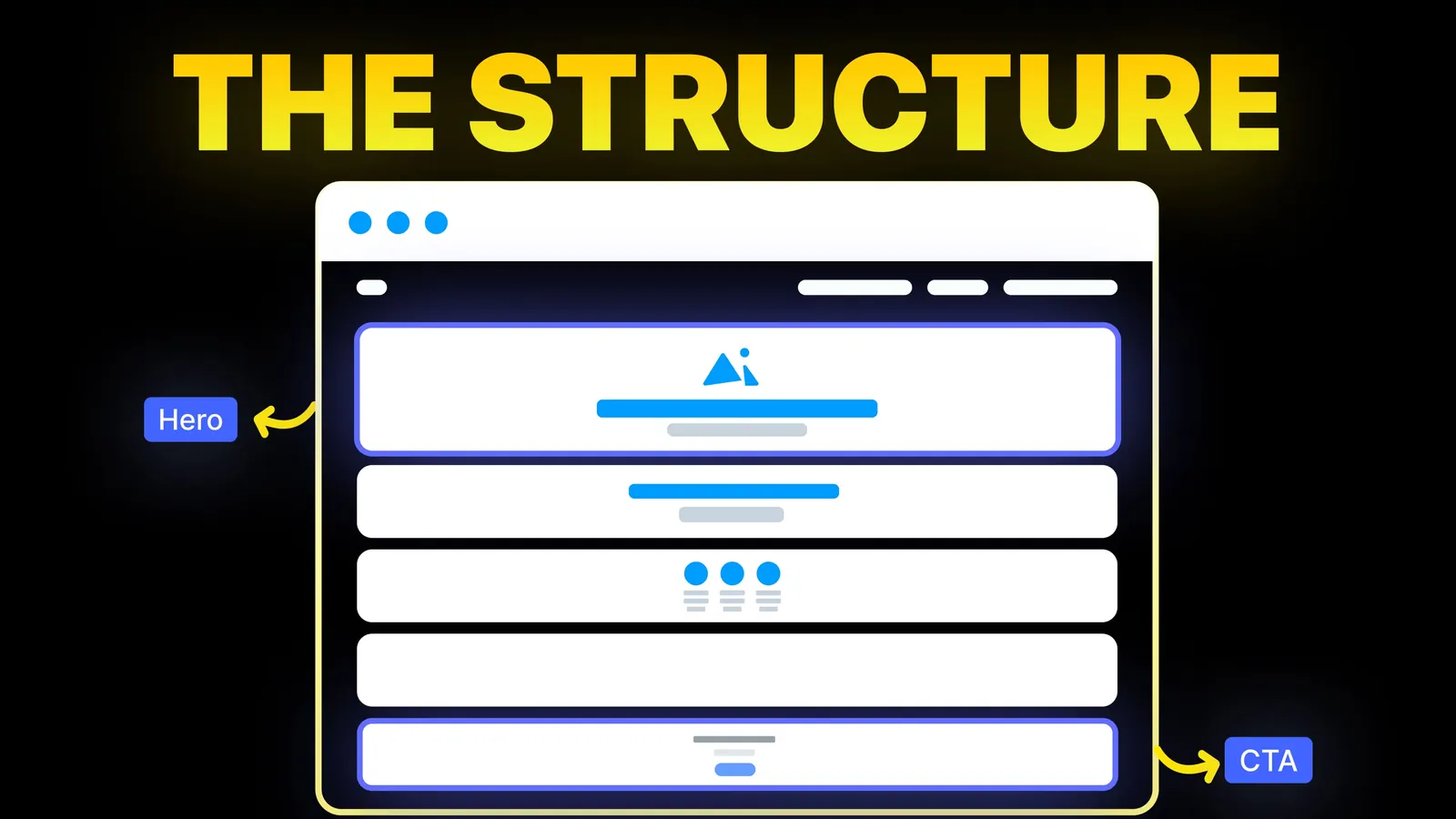
How to Turn Your Website Into a High-Converting Sales Machine
The structure behind a website that sells: the five decisions that carry conversion, the homepage section order, and how to rebuild without losing traffic.
Copywriting
Good website copy is mostly found, not invented. Here is the method: collect the language, build the hierarchy, write the hard parts first, then edit hard.
Design decides whether a page is pleasant to read. Copy decides whether it is worth reading. A beautiful layout carrying vague words converts worse than a plain page that says exactly what the reader needed to hear, which is why we write before we design on every project.
This guide is the method, in order. It works for a homepage, a service page or a landing page.
The best phrases on a converting page were usually said by a customer first. Before writing anything, gather:
Copy the phrases word for word into one document. You are looking for the words your market already uses, because a reader recognises their own language instantly.
Before sentences, decide what the page says at three levels:
If you cannot fill the proof column, you have found a claim you should not make yet.
Draft the headline early to guide the rest, and rewrite it at the end when you know what the page actually says. A useful headline test: could a competitor use it unchanged? If yes, it is not specific enough.
| Weak | Stronger | Why |
|---|---|---|
| We help businesses grow | More booked demos from the traffic you already have | Names the outcome and the lever |
| Your trusted partner | Your Webflow site, maintained within one business day, every time | Replaces an adjective with a promise |
| Solutions that scale | Add a new landing page in an afternoon, without a developer | Makes scale concrete |
Headlines for the first screen specifically are covered in hero section design.
Each section answers the question the reader has at that point of the page, not the next thing you want to say. The sequence that matches how people decide is set out in landing page structure that actually converts. Within each section:
"Submit" and "Learn more" tell the reader nothing. A good call to action says what happens when they click.
Keep the same wording everywhere the same action appears. Two labels for one button reads as two different things.
Every buyer arrives with a few questions they will not ask out loud: what does it cost, how long does it take, what if it does not work for us, what happens after. Write those answers into the page, close to the call to action, rather than leaving them for a sales call the visitor may never book. The pattern is covered from the design side in why your website is not converting.
The first draft is always too long. Edit in passes:
If any answer is no, fix that before any design change.
Whoever writes it needs access to real customer language. A good arrangement is a first draft from the person closest to sales, edited by someone strong at structure.
As long as the decision needs. Cheap and simple needs little. Expensive and considered needs the objections answered, and cutting them only moves the questions into email.
Yes, indirectly and directly. Clear, specific copy that matches what people search for ranks better, and pages that answer the question keep visitors longer.
It can draft structure and variations quickly. It cannot know your customers' words or your real proof, which are the parts that make copy convert, so treat its output as a starting point.
Watch scroll depth, clicks on the main call to action and the quality of enquiries. If people read to the end and do not act, the offer or the objections are the problem, not the button.

The structure behind a website that sells: the five decisions that carry conversion, the homepage section order, and how to rebuild without losing traffic.
Twelve signs your website needs a redesign, each with a five-minute test you can run yourself, plus five problems that need a fix instead of a rebuild.
Website redesign SEO checklist built on Google's own site move guidance: baseline, content triage, redirect map, launch day steps and a 90 day monitoring plan.