
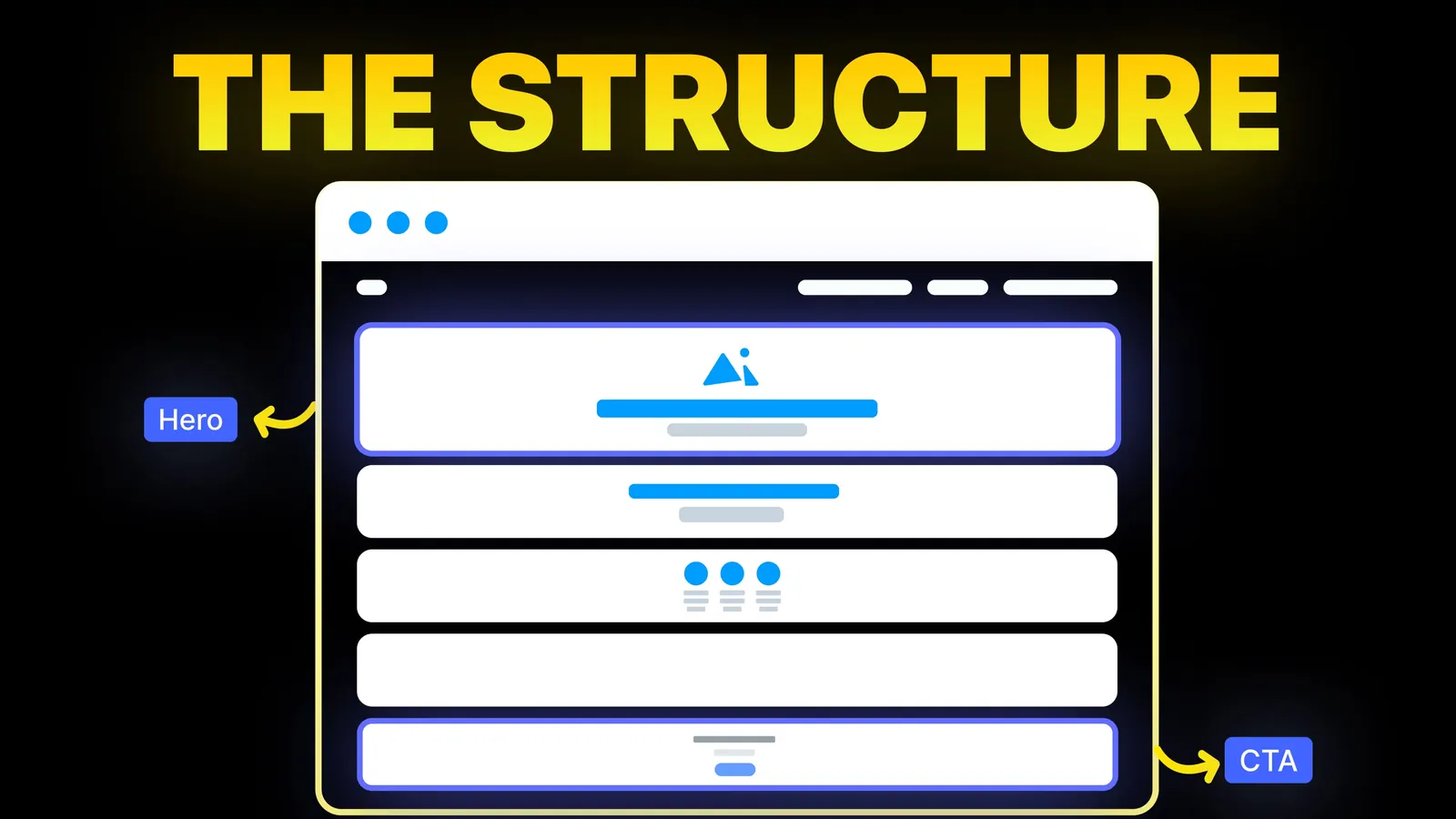
How to Turn Your Website Into a High-Converting Sales Machine
The structure behind a website that sells: the five decisions that carry conversion, the homepage section order, and how to rebuild without losing traffic.
Web Design
Most lists tell you to redesign when your site "feels dated". This one gives each sign a test you can run in five minutes, a rule for choosing between a fix and a redesign, and five problems that a redesign will not solve. Checked October 2026.
This guide is for the owner or marketer who is asking "do we need a new website?" and wants an answer before talking to a studio. It is about the decision to redesign. If your site gets visitors and you want to know why they do not enquire, our guide to why a website is not converting is the more detailed diagnosis.
Run each test on a real device and write down the result. A sign that shows up in the test is a sign. A sign you only suspect is a guess.
The test. Paste your home page and your most important inner page into PageSpeed Insights and read the mobile result. Google's Core Web Vitals guidance sets the targets at a Largest Contentful Paint of 2.5 seconds or less, an Interaction to Next Paint of 200 milliseconds or less and a Cumulative Layout Shift of 0.1 or less. Google measures them at the 75th percentile of page loads, so a page passes only when three out of four visits meet all three.
Fix or redesign? If the cause is a few oversized images or one heavy script, fix it. If every page fails and the cause is the theme, the page builder or the hosting, the structure is the problem.
The test. On your own phone, try three tasks without zooming: find your phone number, open the main menu, and send an enquiry through the form. If any of the three takes more than a few seconds or needs a pinch, write it down. Google uses the mobile version of your content for indexing and ranking, which it calls mobile-first indexing, so a weak phone page is also a weak search page.
Fix or redesign? A button that is too small is a fix. A layout that was built for desktop and squeezed onto a phone is a redesign.
The test. Open Google Search Console, go to the Performance report and compare the last 12 months with the 12 months before. Then look at which pages lost clicks. A drop across the whole site after a platform change, or a drop on pages that now load slowly, points at the site. A drop on one topic points at competitors or a change in how people search.
Fix or redesign? Check for technical causes first: redirects, blocked pages and slow templates. A redesign is not a cure for lost rankings, and a careless one can cause them.
The test. From your analytics, work out how many enquiries you get for every 100 visits, then compare it with your own figure from a year ago. Do not compare it with an industry average, because definitions of an enquiry differ too much. If the visits are steady and the enquiries are down, the site has changed in effect, even if you have not touched it. A real example is our custom furniture website rebuild, where a form that asked for specifics produced ready-to-quote enquiries.
Fix or redesign? If one page leaks, restructure that page. Our guides to landing page structure and writing website copy that converts cover that. If most pages leak, the site does not guide anyone to an action.
The test. Show your home page to three people who do not know your business for five seconds, then hide it and ask what you sell and who it is for. If two of the three cannot answer, the message is the problem. A new colour palette will not change the answer.
Fix or redesign? A weak headline is a copy fix. A site that never states who it is for, in any section, needs its structure reworked.
The test. Open every service, price, team and location page. Mark each one that is wrong, missing or about something you stopped doing. Count the pages that are more than a quarter wrong.
Fix or redesign? One out-of-date page is a content job. If the services themselves have changed, so has the site map, and the navigation needs to change with it.
The test. Put your site, your business card, your invoice and your social profile side by side. If the logo, colours, tone and photography look like different companies, visitors notice, even when they cannot say why.
Fix or redesign? A new logo or colour is a refresh. A brand that has moved to a new market or price point needs a new site to match it.
The test. Open ten pages and for each one write the single action you want the visitor to take. If you cannot name it, or a page offers four equal buttons, the visitor will not choose either.
Fix or redesign? Adding a button is a fix. If the site has no consistent path from first visit to enquiry, the structure needs reworking.
The test. Try to change a phone number, add a new team member and publish a new page, and time yourself. If any of the three takes more than about ten minutes or needs someone else, the way the site is built works against you.
Fix or redesign? Training can solve a confusing editor. A site built as fixed pages with no editable structure needs to be rebuilt on a platform your team can run. Our guide to Webflow vs WordPress compares the two most common choices, and Wix vs Webflow covers a Wix owner's move.
The test. Check what the site runs on. On a WordPress site, the Site Health screen shows the PHP version and plugins that need updates. On 16 October 2026, php.net lists PHP 8.2 to 8.5 as supported, and 8.2 gets security fixes only until 31 December 2026. If you are on an older branch, or if updating a plugin breaks the site, you have a security problem and an editing problem together.
Fix or redesign? An update is a fix. A site that cannot be updated without breaking, or a theme that is no longer maintained, is a rebuild.
The test. Press the Tab key from the top of a page and see whether you can reach every link and form field in order, and whether you can always see where you are. Then check body text contrast. The WCAG 2.2 rule is a ratio of at least 4.5 to 1 for normal text and 3 to 1 for large text, which you can read in the W3C explanation.
Fix or redesign? A low-contrast grey is a fix. A site where menus and forms cannot be used with a keyboard has a structural problem.
The test. Submit every form yourself, from your phone, and confirm the message arrives. Click through the main navigation and the footer, and run the checkout if you sell online. Do it once a month for a quarter, because a broken form often fails quietly.
Fix or redesign? One broken form is a repair. If the problems return every few weeks, something underneath is failing.
Count the signs your tests confirmed. Our rule of thumb:
| Signs confirmed | What it usually means | What to do |
|---|---|---|
| 0 to 2 | Isolated problems | Fix them. A speed fix, a copy edit or a form repair costs far less than a project. |
| 3 to 5 | A tired site with a sound base | Refresh: new layout and copy for the pages that matter, on the same platform. |
| 6 or more | The structure is working against you | Redesign: strategy, structure and design from scratch. |
| Sign 9 or 10 with two others | The platform is the problem | Rebuild on a platform that fits who edits and what the site must do. |
A redesign changes how the site looks and is organised. A rebuild changes what it runs on. Many projects are both, and the order matters: decide the structure first, then the platform. Our conversion-focused redesign starts with positioning and structure for that reason.
A redesign is expensive, and several common worries have cheaper answers.
Low traffic is a visibility problem. A better-looking site with the same content, links and search presence gets the same traffic. Look at what people search for, which pages exist for it and who links to you.
If your enquiries per 100 visits are steady or rising and the site loads fast, an old look is a low priority. Refresh the headline and the photos, and keep the structure that works.
When most of the leak sits on one page, such as a pricing page or a booking form, rework that page. Our website optimization service is built for this: more from the site you already have.
A brand update is a re-skin. Update the tokens, images and templates, and keep the site map and URLs.
Wanting something new is not a measurement. Owners see their site more than anyone else, and visitors see it once. Run the tests above, and if they pass, wait.
The biggest avoidable loss in a redesign is search traffic. Our full website redesign SEO checklist walks through each step, including the redirect map and a 90 day monitoring plan.
We followed that rule on our own move: when amariq.com left Webflow for a static site, we kept every URL working. If the platform is changing, our Webflow migration service covers the redirect map and the launch checks.
Who does the work matters too: see agency vs freelancer vs in-house for what each costs and when each wins.
At Amariq, the first call is about your goals and what is holding the site back, with no packages to squeeze into. We design and develop under one roof, and we build on Webflow, WordPress, Shopify and Framer, and suggest a move to a better-fit platform only when the current one holds you back. The route is chosen from your results: whether you need a fix through website optimization, a conversion-focused redesign or a platform move. Most landing pages take two to three weeks, marketing websites three to six, and CMS-driven sites six to eight, with milestones and a delivery date agreed before work starts. Our guide to how long a redesign takes compares nine published ranges. After launch, a short handover means your team can run the site, with maintenance available when you would rather hand it over.
If you are weighing studios as well, our 15 questions for choosing an agency come with a scorecard. If your tests show several signs, send us your results on the contact page, or read our guide to building a high-converting website first.
Redesign when the tests show structural problems, not on a fixed schedule. A site that loads fast, answers questions clearly and brings in enquiries can last many years with edits. A site that fails several tests in its first year should be changed sooner.
Run the 12 tests and count. Isolated problems such as a slow image, an old photo or one broken form need updates. A message that confuses strangers, a layout that fails on phones, or a site your team cannot edit are structural, and updates will not hold.
Not necessarily. Look is only one signal, and the weakest. If your visits convert at your own steady rate, the site loads within Google's targets and the content is right, an older style costs you little. Update it when you next touch the pages.
A redesign changes the structure, messaging and look. A rebuild changes the platform or code the site runs on. You can redesign on the same platform, or rebuild on a new platform with the same design. Choose the structure first and the platform second.
It can, if URLs change without redirects, ranking pages are deleted or the new site is slower. It does not have to. Keep the addresses that rank, redirect any that must move, and compare Search Console before and after.
It depends on size and how quickly feedback and content arrive. Our ranges are two to three weeks for a landing page, three to six for a marketing website and six to eight for a CMS-driven site. Two other studios publish six to twelve weeks for a typical business site.
No. A design cannot fix an unclear offer, and traffic from the wrong audience will not convert. Set a baseline, decide the one action each page should drive, and measure again after launch.
Your baseline numbers, a list of pages that earn traffic, the list of your top three services in order of importance, the logins to your domain and hosting, and the results of the tests above. A one-page brief, like the one in our small business guide, gets better quotes.
Yes. If your team can edit the site and nothing in signs 9 and 10 applies, redesigning on the same platform is usually quicker and keeps your URLs intact. Change platforms only when the platform itself is the reason for the problems.

The structure behind a website that sells: the five decisions that carry conversion, the homepage section order, and how to rebuild without losing traffic.
Website redesign SEO checklist built on Google's own site move guidance: baseline, content triage, redirect map, launch day steps and a 90 day monitoring plan.
How long a website redesign takes: nine published studio ranges, where the weeks go, the time you give, and a planner that works back from your launch date.