
How to Turn Your Website Into a High-Converting Sales Tool
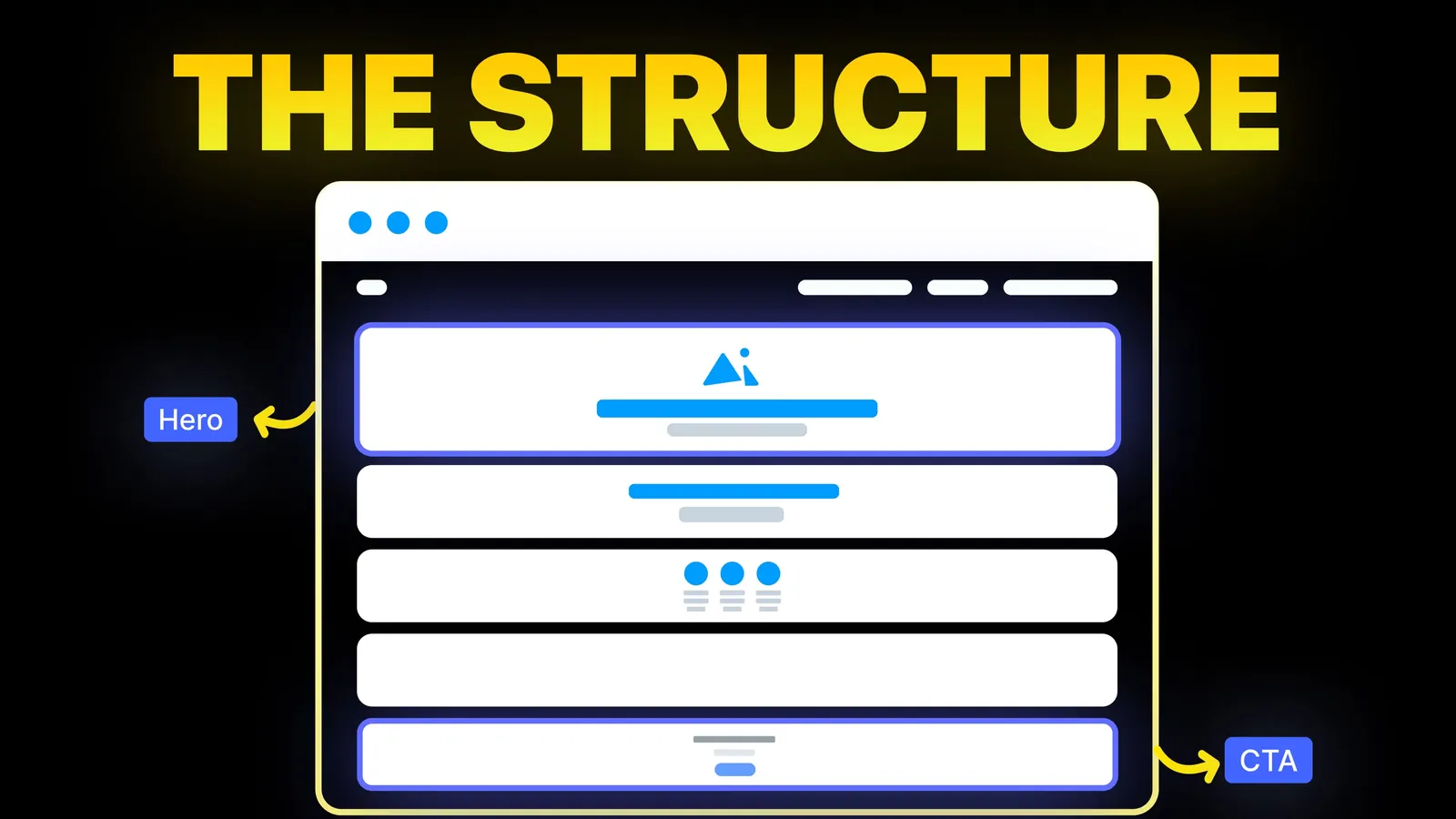
The structure behind a website that sells: the five decisions that carry conversion, the homepage section order, and how to rebuild without losing traffic.
Web Design
Most GDPR checklists describe a whole organisation, from impact assessments to staff policy. A website owner usually has a narrower question, which parts of this site touch personal data and what each one needs. This guide answers that with the article numbers attached. It is general information and not legal advice.

If your site reaches people in the EU, list what it collects, decide a lawful basis for each use, publish a privacy notice that says so, ask consent before non-essential cookies, sign data processing terms with suppliers who handle the data for you, keep the data secure and only as long as needed, and have a way to answer requests and report breaches. Some duties depend on your size and risk. Get advice for your own case.
We searched Google (US, English) for "gdpr website compliance checklist" on 27 November 2026. Page one included GDPR.eu (two checklists), gdprchecklist.io, a law firm PDF, UniConsent, HubSpot, Cookiebot, a web agency article and a LinkedIn post. We read GDPR.eu's checklist in full and looked at the headings of Cookiebot's and UniConsent's, which run to ten and sixteen numbered areas. The article and recital texts cited below were read on gdpr-info.eu the same day.
Those lists are organised by legal topic. They are useful, but a site owner then has to work out which topic applies to the contact form or the booking tool. GDPR.eu's list is also short on exceptions: it advises non-EU organisations to appoint a representative in the EU without mentioning the exemption that Article 27 contains. This page goes feature by feature and states the exceptions next to the duties.
Article 3 covers organisations established in the EU, and can also cover those outside it that offer goods or services to people in the EU or monitor their behaviour there. Our cookie consent guide walks through that test. The United Kingdom has its own version; see our UK website redesign guide for the local points we cover.
| On your site | What to check | Where it comes from |
|---|---|---|
| Contact or quote form | Only fields you need; a notice or link beside the form; a deletion date | Article 13 |
| Newsletter sign-up | A clear choice, no pre-ticked box, an easy way to leave | Recital 32; email marketing rules also apply |
| Analytics and ad pixels | Consent before they load, unless an exemption applies where you are | Cookie rules plus GDPR consent standard |
| Booking or shop checkout | What is required to complete the order, and who receives it | Article 13 |
| Hosting, form, email and CRM tools | A data processing contract with each supplier acting for you | Article 28 |
| Suppliers outside the EU | Say that data is transferred and what safeguard covers it | Article 13 |
| Admin logins and backups | Strong passwords, two-step sign-in, limited access, encrypted transfer | Security duty; see our checklist link below |
| Embedded maps, video and chat | What they send to the third party, and whether they need consent first | Cookie rules |
The consent point about pre-ticked boxes and silence comes from recital 32, and it is covered with the regulators' views in the cookie guide. For security basics, use our website security checklist, and for form handling our Webflow forms guide if your site runs there.
Article 13 sets out what to tell people when you collect data from them. Use this as a fill-in list.
| Item | Your answer |
|---|---|
| Who you are and how to contact you | |
| A data protection officer's contact, if you have one | |
| Each purpose and its lawful basis | |
| The legitimate interests, where that is the basis | |
| Who receives the data, or the categories of recipient | |
| Any transfer outside the EU and the safeguard | |
| How long you keep it, or how you decide | |
| Rights: access, correction, erasure, restriction, objection, portability | |
| Right to withdraw consent, where consent is the basis | |
| Right to complain to a supervisory authority | |
| Whether giving the data is required, and what happens if they refuse | |
| Any automated decision-making or profiling |
Article 12 adds that the wording must be concise, easy to find and in clear and plain language. Our privacy policy guide covers the page itself.
Article 27 says organisations outside the EU that are caught by Article 3(2) must appoint a representative in the EU in writing. It does not apply to processing that is occasional, does not include large scale processing of special categories or criminal data, and is unlikely to risk people's rights and freedoms. Public bodies are also exempt. All of those conditions for the processing exemption have to hold together. A site that collects enquiries every week may find "occasional" hard to argue, which is a point for an adviser.
Article 30 requires a written record of processing: purposes, categories of people and data, recipients, transfers, erasure time limits and security measures, where applicable. As the text stands, it does not apply to organisations with fewer than 250 employees unless the processing is likely to cause a risk, is not occasional, or includes special category or criminal data. Because routine customer and staff processing is rarely occasional, many small firms still keep a record. A one page table is enough to start.
The EU's Omnibus IV package would widen this relief. The European Parliament's legislative train page, updated 25 October 2026, marks the file "close to adoption" after a provisional agreement on 9 June 2026. The European Post reported that Members of the European Parliament were due to vote on 24 November and that the agreed text lifts the record duty for organisations under 1,000 staff, unless their processing is likely to pose a high risk or their core activities require a data protection officer. It also reported that the Council still has to adopt the text. Until the final law is published and applies, work to the current wording and check again before relying on the new threshold.
Article 33 says a controller must tell the supervisory authority without undue delay and, where feasible, within 72 hours of becoming aware of a personal data breach, unless it is unlikely to result in a risk to people. A late notice must explain the delay. Suppliers acting for you must tell you without undue delay, and you must record every breach, including those you do not report. Write down who decides and who sends the notice before you need it.
| Step | Deadline or rule from Article 12 |
|---|---|
| Receive it, by any route you offer | Make exercising rights easy |
| Check identity if you have reasonable doubts | Ask only for what you need |
| Reply with action taken | Without undue delay, within one month |
| Need more time | Up to two further months, tell the person and why within the first month |
| Not acting | Say why within one month and mention complaint and court routes |
| Cost | Free, unless manifestly unfounded or excessive |
Add one email address for requests to the privacy notice, and check that someone reads it.
We can audit what your site loads and collects, remove scripts nobody uses, rebuild forms around the fields you need and connect a consent setup to your tags. Wording and legal judgement stay with your adviser. Pricing follows the scope we agree, with no hourly meter, split 40% to start, 30% on approval of the design and 30% before launch. The design, copy and code transfer to you with the final payment, and domain, hosting and analytics accounts carry your name. Ask about website maintenance if your site runs on Webflow, or send us a message.
If it is established in the EU, or offers goods or services to people there or monitors them, yes. Size changes some duties, not whether the law applies.
No. It deals with cookies and similar storage. Forms, notices, supplier contracts, requests and breaches are separate.
Only in some cases, set out in Article 37, mainly public bodies and organisations whose core work involves large scale monitoring or sensitive data. Check yours with an adviser.
No fixed number applies. Set a period tied to the purpose, state it in the notice and delete on schedule.
It can, under Article 3, where you target or monitor people in the EU.
Where feasible, 72 hours after you become aware of it, for breaches that are likely to risk people's rights.
If you already have fewer than 250 staff, you have the current relief with its conditions. The new text rewrites those conditions, so reread it once it is final.

The structure behind a website that sells: the five decisions that carry conversion, the homepage section order, and how to rebuild without losing traffic.

Thank you page design for a business site: what to confirm first, one next step, and the build rules behind it. Checked 13 Nov 2026.

FAQ page design that works: where questions come from, when to use accordions, accessible markup, and FAQ schema after 2026. Checked 15 Nov 2026.